
Best Belay Device for Beginners: Why We Recommend the Petzl GriGri
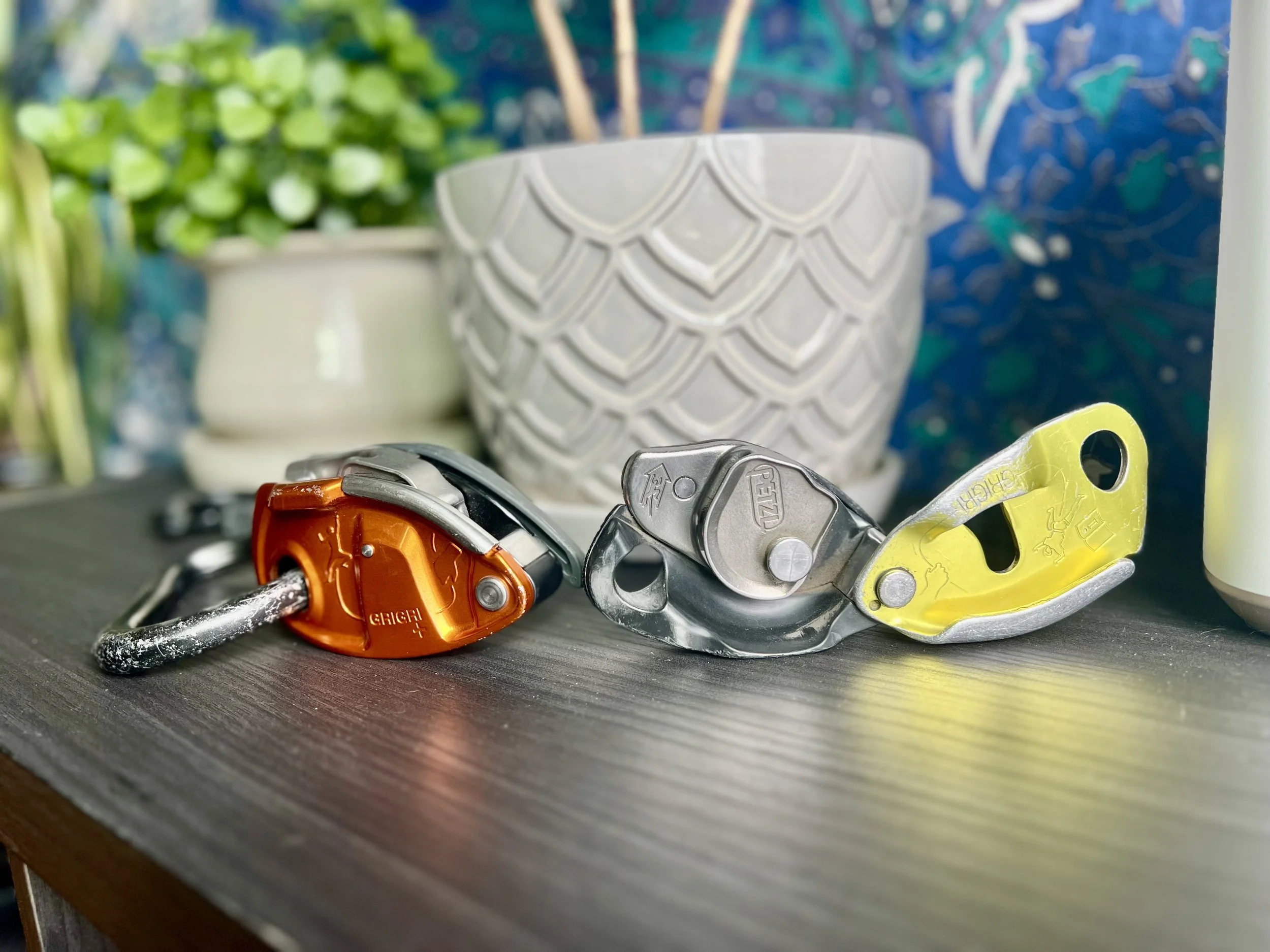
Petzl GriGri and Petzl GriGri+.
Today I’m going to tell you which belay device you should buy first and explain exactly why.
In fact, as a climbing guide, I’ve trusted this device with my life thousands of times. I’ve even trusted my life to brand new belayers with this device in hand. Yikes!
Belay devices are critical pieces of equipment for any climber. For myself and other AMG guides, this device is a mandatory piece of equipment on our harnesses.
So if you’re a new climber and want to know which belay device to purchase and why, keep on reading.
Here’s the lowdown.
Why the GriGri?
Quick answer: For most new climbers, the best first belay device is the Petzl GriGri or GriGri+. It is an assisted-braking device that works well for gym climbing, outdoor sport climbing, top roping, and many multi-pitch situations. You still need proper belay technique, but the assisted-braking gives an extra margin of security. When the climber falls, a camming device inside the belay device pivots and pinches the rope, stopping the flailing climber dead in their tracks.
Poor word choice aside, the GriGri is the most trusted assisted-braking device on the market today. The internal cam mechanism works like this—
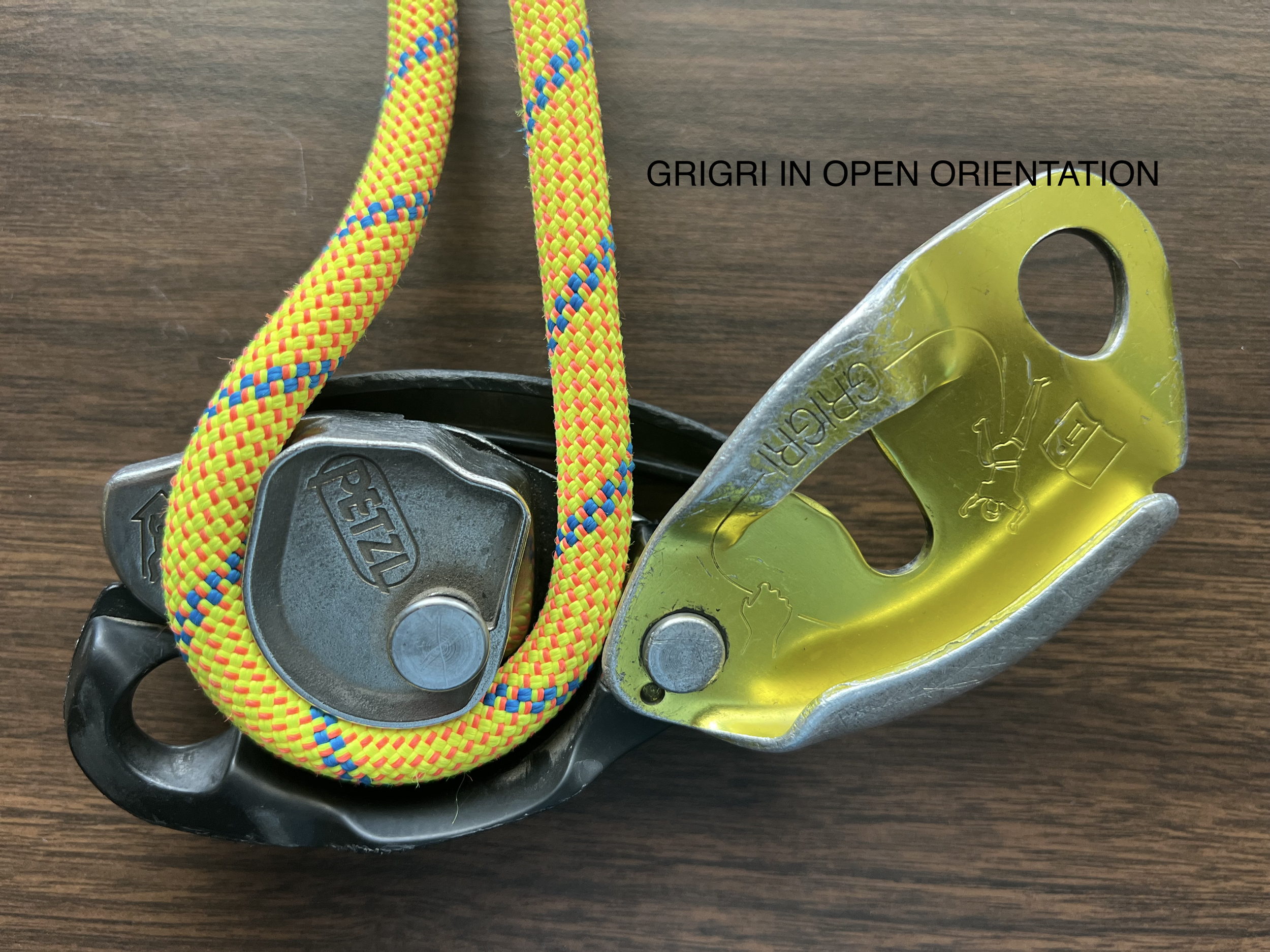
When the cam is “open” and disengaged, it allows rope to feed smoothly through the device.

When the climber falls, the rope engages the cam, “locking” the belay device off and assisting in arresting the fall.
Important safety caveat: assisted braking is not hands-free
A GriGri is an assisted-braking device, not an automatic belay robot. You still need to keep your brake hand on the rope, load the device correctly, and learn the proper technique from a qualified instructor. The magic of the GriGri is that, when used correctly, the cam helps pinch and block the rope during a fall.
In a sport like rock climbing, where you may be belaying your partner for long periods of time, any assistance is welcome.
It Has Pictures


One of the most beginner-friendly features of the Petzl GriGri is that the rope orientation is printed directly on the device.
That matters because a belay device only works properly when it is loaded correctly. On the side plate of the GriGri, Petzl includes simple diagrams showing which strand goes to the climber and which strand goes to the brake hand. These markings give new climbers a quick visual check before they start belaying.
They are not a substitute for proper instruction, partner checks, or keeping your brake hand on the rope. But they do make the device easier to inspect at a glance, especially when you are still learning, switching between partners, or tired at the end of a long climbing day.
A GriGri helps remove one small layer of confusion from the belay setup, which is exactly what you want as a newer climber.
It Is Versitile
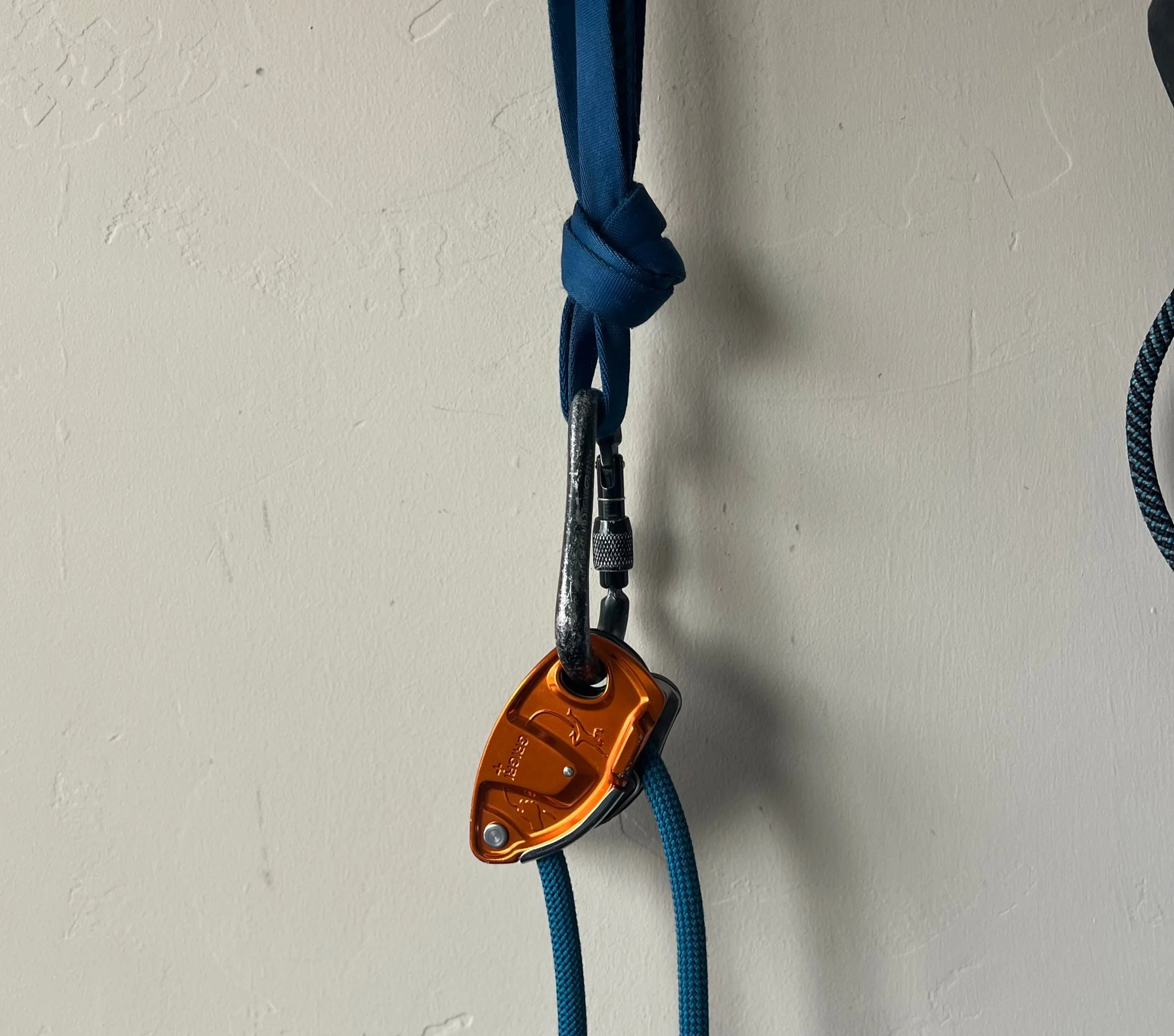
A GriGri in top-down mode for multi-pitch belaying.
The GriGri is not just a beginner belay device. It is useful across a wide range of climbing situations, which is one reason so many climbers continue using it long after they have moved beyond the basics.
For new climbers, the GriGri works well for top-rope belaying, gym climbing, and outdoor sport climbing. As you progress, it remains useful for lead belaying, belaying a follower from above in some multi-pitch systems, and giving a comfortable belay when your partner is working a route.
For any guide or active outdoor climber, that last point matters. If your partner is hangdogging, projecting, or spending a long time on one section of a climb, an assisted-braking device can make the belay more comfortable and controlled than many traditional tube-style devices.
The main limitation is that a GriGri is designed for single-rope use. It is not the right tool for every situation, especially rappelling on two strands, climbing with half ropes, or certain alpine systems. But for the type of climbing most beginners start with, and the type of climbing many people do for years, the GriGri holds its own. You won’t be buying something you will immediately outgrow; you will be buying a tool that can stay on your harness as your climbing skills develop.

An Orange GriGri+.
GriGri vs ATC: Which should beginners buy?
For most beginner climbers, the standard Petzl GriGri is the best first belay device. An ATC is still worth owning if you plan to rappel, climb multi-pitch routes, or use double-rope systems. But if your main goal is gym climbing, top roping, outdoor sport climbing, and learning to lead belay, a GriGri is the device I recommend first.
| Belay Device | Best For | Pros | Cons |
|---|---|---|---|
| Petzl GriGri | Most gym climbers, outdoor sport climbers, and beginner climbers | Assisted braking, smooth lowering, great for top roping, lead belaying, and projecting routes | More expensive than an ATC and designed for single-rope use |
| ATC / Tube-Style Device | Rappelling, multi-pitch climbing, alpine systems, and climbers on a tighter budget | Affordable, lightweight, simple, and useful with double-rope rappel systems | No assisted-braking cam, so proper brake-hand technique is especially important |
| Petzl GriGri+ | New belayers, top-rope climbing, gym use, and instruction | Assisted braking, anti-panic handle, and a mode selector for top rope or lead belaying | More expensive and slightly bulkier than the standard GriGri |
Best Belay Device for Gym Climbing
For gym climbing, the Petzl GriGri is hard to beat. Most gym climbing involves top roping, lead climbing, lowering, and repeated falls while climbers work routes. The GriGri handles all of that well when used correctly.
Its assisted-braking design gives newer belayers an extra margin of security, while still requiring proper technique and an active brake hand. It also makes long belays more comfortable, especially if your partner is hanging on the rope, resting between attempts, or projecting a route.
Many gyms already require or strongly prefer assisted-braking devices due to increased safety margins, and GriGris are the industry standard.
Best Belay Device for Outdoor Sport Climbing
For outdoor sport climbing, the GriGri is also my top recommendation for most climbers. It works well for lead belaying, top roping, and giving a comfortable catch when your partner is working a route.
This is where the GriGri really shines. Outdoor sport climbing often involves repeated falls, hanging on the rope, cleaning routes, and lowering from anchors. An assisted-braking device makes those situations easier to manage, especially during long belays or projecting sessions.
Common GriGri Mistakes to Avoid
Loading the rope backward
Letting go of the brake strand
Holding the cam open while someone falls
Lowering too quickly
Using the wrong rope diameter
Skipping partner checks
GriGri or GriGri+?

Multiple generations of GriGris and a GriGri+.
For most climbers, the standard Petzl GriGri is the best all-around choice. If you are mainly top roping, teaching new belayers, or want the anti-panic lowering feature, the GriGri+ is worth considering, although some belayers find the more sensitive assisted-braking mechanism cumbersome.
What Rope Diameter Works With a GriGri?
The current Petzl GriGri works with 8.5 mm to 11 mm dynamic single ropes. Petzl says it is optimized for ropes between 8.9 mm and 10.5 mm, which is the range most climbers should aim for.
For most beginner climbers, I would recommend pairing a GriGri with a rope in the 9.5 mm to 10.2 mm range. Thinner ropes can feed quickly and require more experienced brake-hand control, while thicker ropes can feel stiff or harder to lower smoothly through the device.
The GriGri+ has the same stated rope compatibility: 8.5 mm to 11 mm dynamic single ropes.
A caveat: rope diameter is not the only thing that matters. Pay attention to rope age, sheath texture, dirt, moisture, and stiffness. These can all change how a rope feeds and lowers through a GriGri. A skinny, slick new rope may feel very different from an older, fuzzier rope of the same diameter.
So the simple answer is: use a dynamic single rope between 8.5 mm and 11 mm, but for everyday gym climbing, top roping, and outdoor sport climbing, most newer climbers will be happiest in the 9.5–10.2 mm range.
FAQs
Is the GriGri worth the money?
Yes, for most climbers. It costs more than a tube-style device, but it is useful for years.
Can you rappel with a GriGri?
Yes, in some single-rope situations, but it is not a replacement for an ATC-style device for two-strand rappels.
Is the GriGri automatic?
No. It is assisted-braking, not hands-free or automatic.
What is the best belay device for beginners?
For most beginner climbers, I recommend the Petzl GriGri.
Do I still need an ATC if I have a GriGri?
Eventually, yes, especially if you plan to rappel, climb multi-pitch routes, or use double-rope systems.
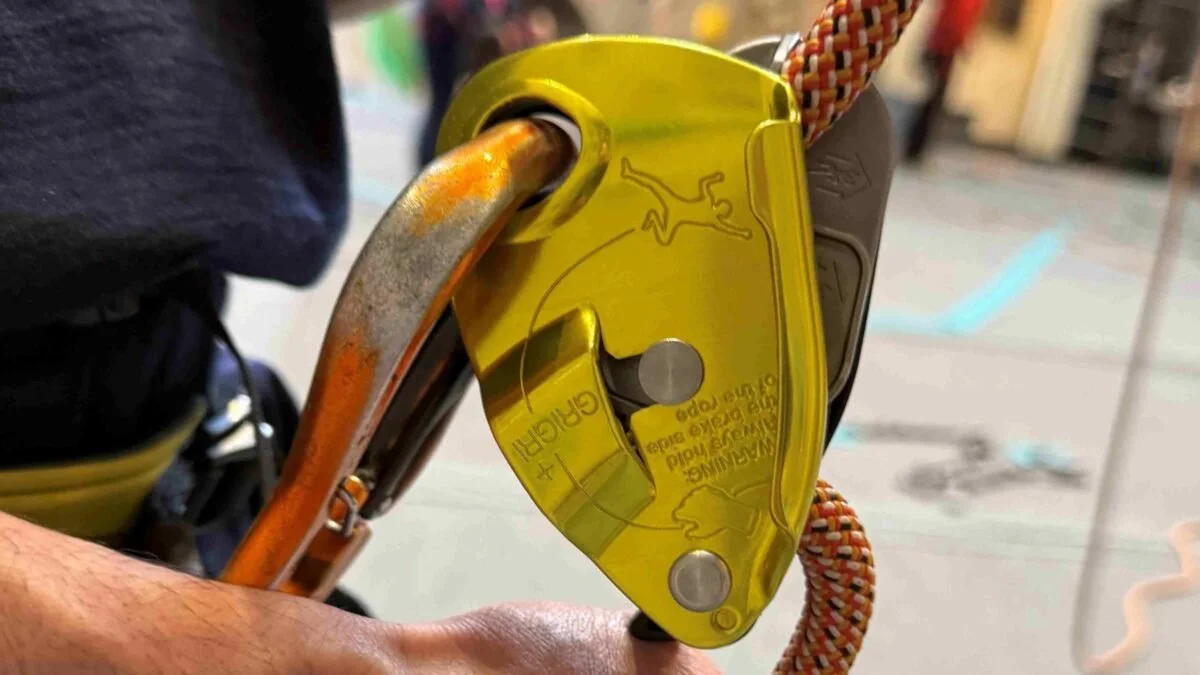
GriGri in braking orientation.
I could go on, but like the learning curve on the GriGri, we’ll keep this short and sweet. Despite its relatively high price point, the device is a smart purchase for most new climbers. Since its release in 1991, the GriGri has remained an irreplaceable companion for climbers around the world.
If you’re ready to move from the gym to real rock, Altitude Mountain Guides can help you build the skills you need to climb outside with more confidence. Our guided rock climbing trips cover the fundamentals of belaying, lowering, communication, movement, anchor building and cleaning, and outdoor climbing systems in a supportive, professional setting.
Ready to climb outside? Check out AMG rock climbing trips.