
How to Know When It’s Time to Resole Your Climbing Shoes
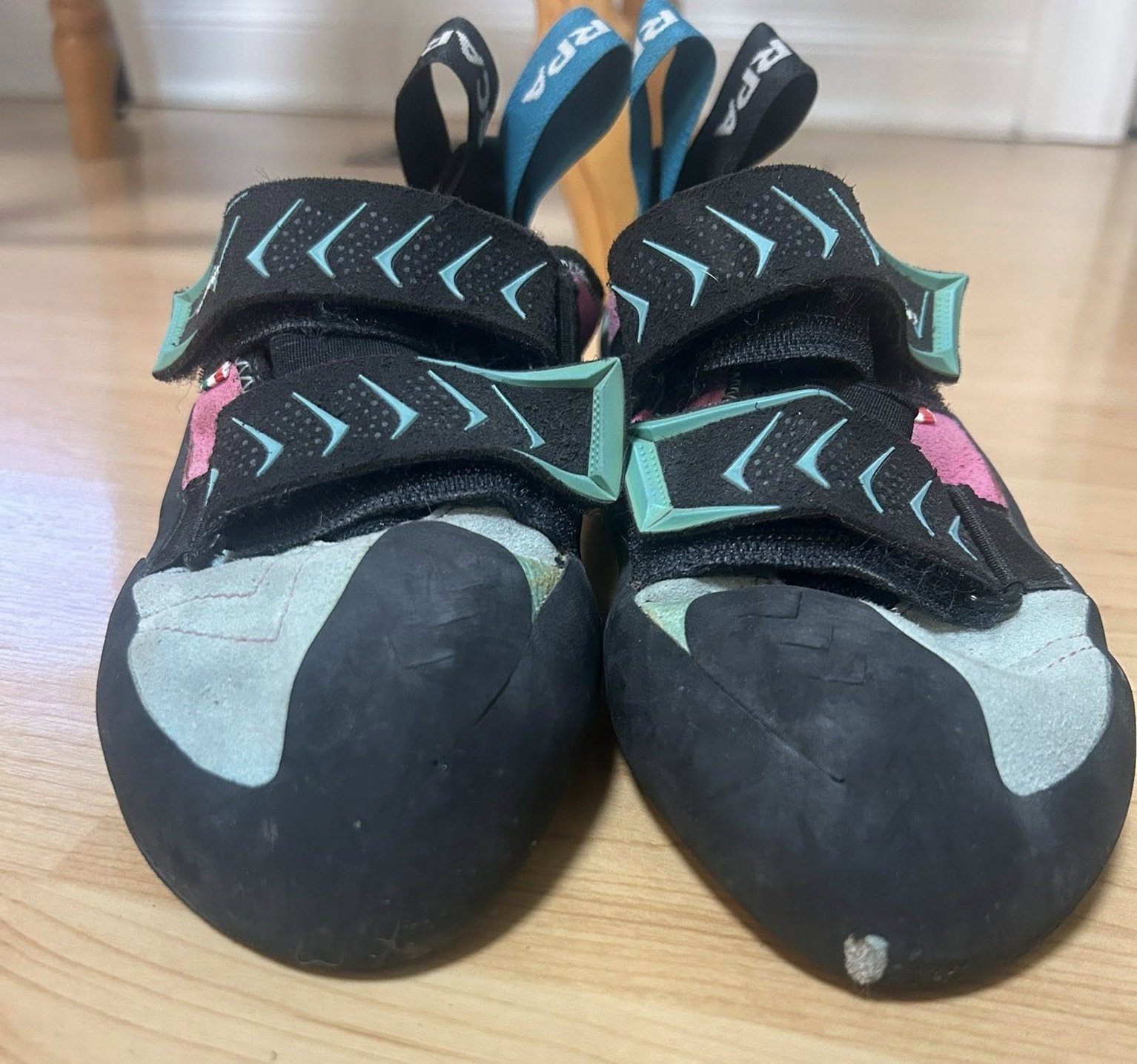
Looking like high time for a resole.
If you’ve been wondering whether it’s time to resole your climbing shoes, the short answer is probably yes.
As a professional mountain guide, between personal shoes and client rentals I’ve gone through hundreds of pairs of climbing shoes over the years. Along the way, I’ve picked up a few reliable signs that tell you when it’s time to send your shoes off for a resole, before it’s too late.
Like most climbing gear, shoes are expensive, so it’s worth some effort to keep them performing optimally for as long as possible. Here’s everything you need to know.
Understanding Climbing Shoe Rubber: Sole vs. Rand
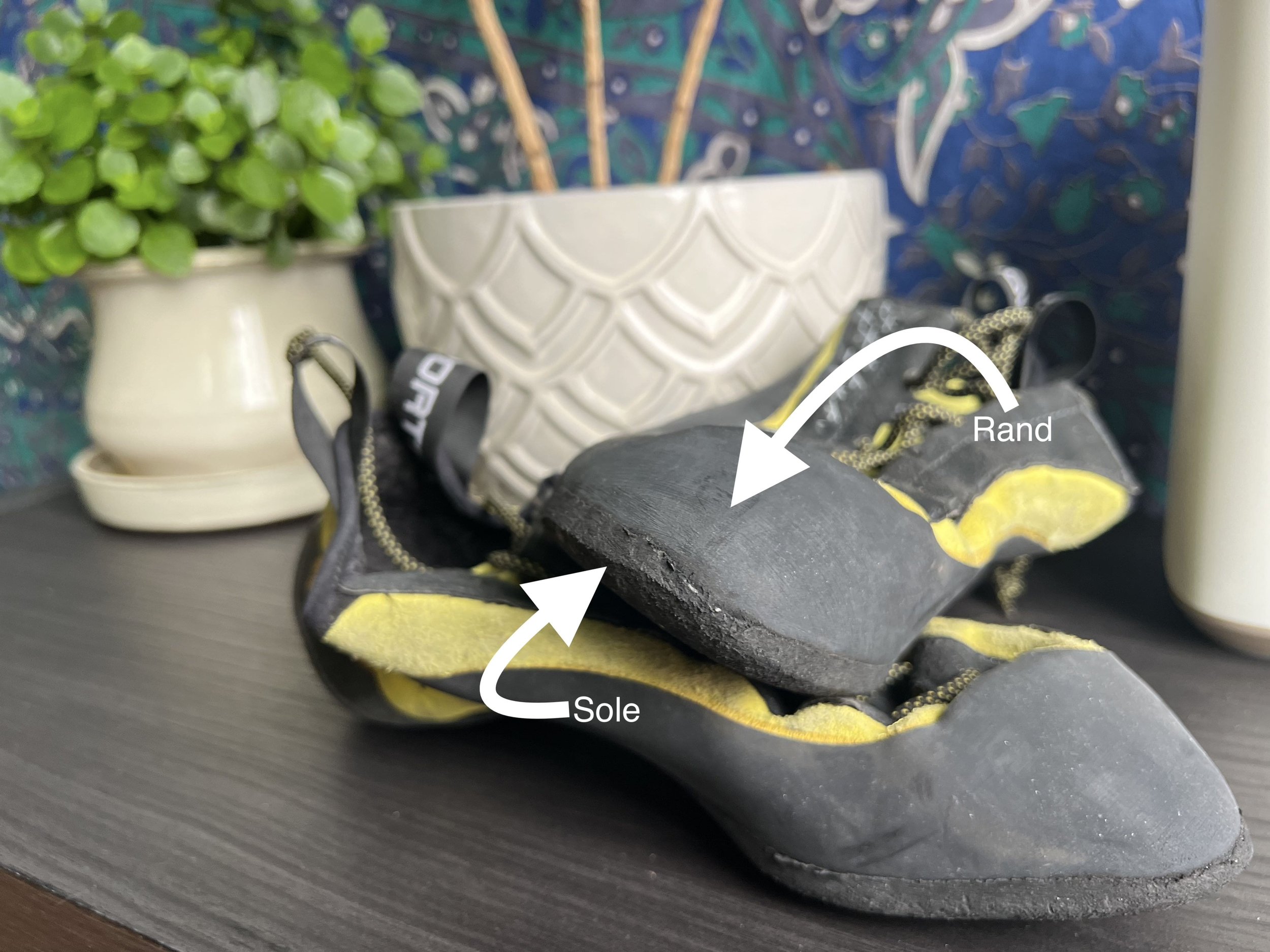
First a little primer on climbing shoe anatomy. Let’s review the two main rubber components that matter most for resoling:
Sole: The 3–6 mm thick rubber that makes direct contact with the rock.
Rand: The thinner layer of rubber that wraps around the toe and under the shoe, protecting the upper material.
Most climbing shoes are made from leather, synthetic materials, or a blend of both. But it’s the rubber that wears out first, and knowing how to spot wear at the right time can save you some heartache.
The Four Stages of Climbing Shoe Wear
Stage 1: Fresh Rubber, No Worries
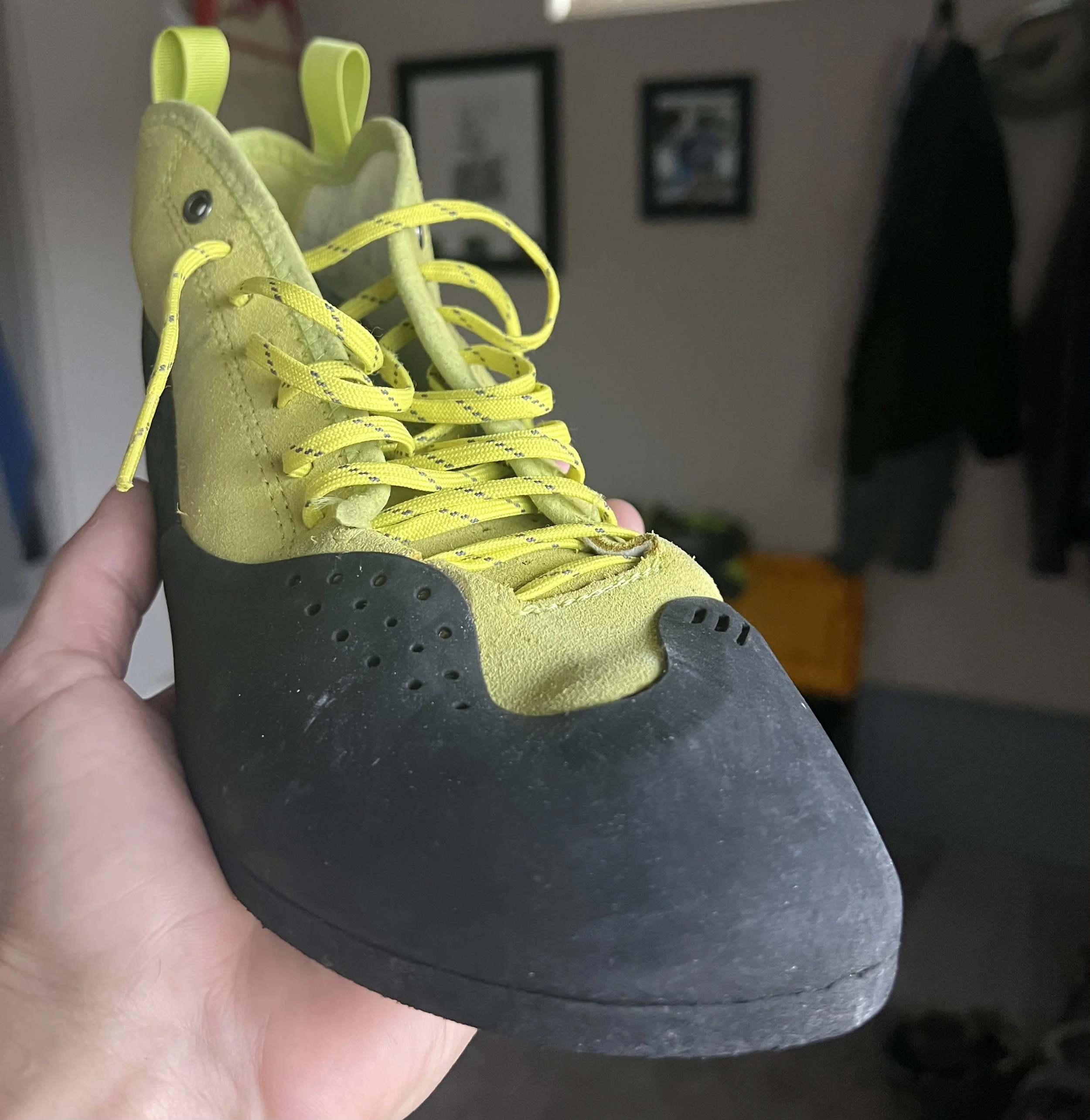
A climbing shoe after a couple of uses.
If your shoes still have a thick toe sole and a clean, distinct line separating the sole from the rand, you’re good to go. Get out there and climb — your shoes are in great shape.
Stage 2: The “Start to Wonder” Phase
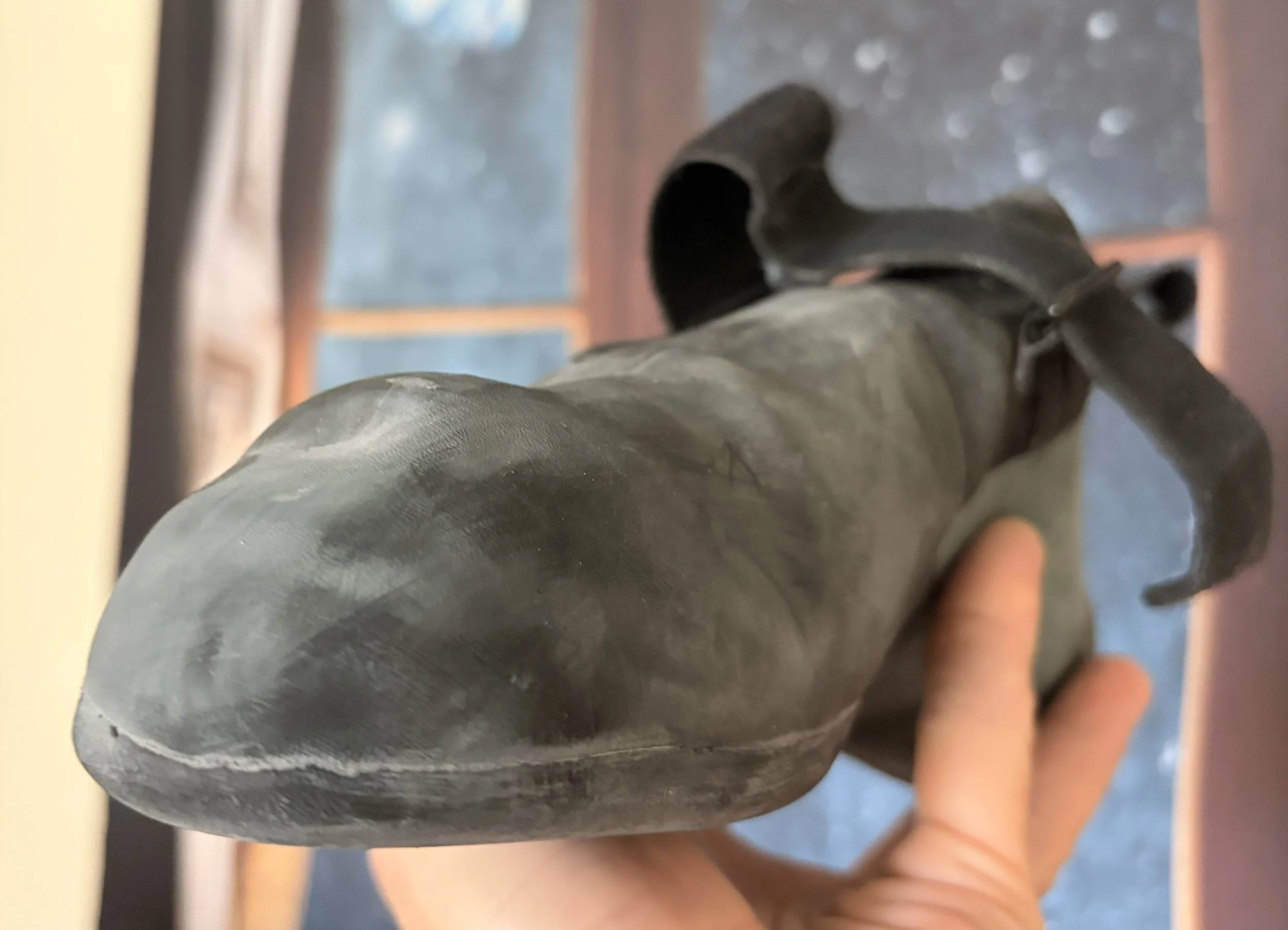
Climbing shoe that has seem some love, but has plenty of life left.
You might notice your shoes aren’t edging quite as well anymore. Those tiny, knife-blade footholds that used to feel secure now feel a bit dicey.
At this stage, your shoes still have life left, but it’s time to pay attention. You can probably squeeze in another few of months, depending on how often you get out, but start being gentle.
Focus on clean, precise footwork:
Avoid dragging or smearing your toes unnecessarily.
Keep “quiet feet.” Place your foot deliberately the first time.
Footwork has a huge impact on the wear rate of climbing shoe rubber. The better your technique, the longer they’ll last.
Stage 3: Time to Resole — Before It’s Too Late
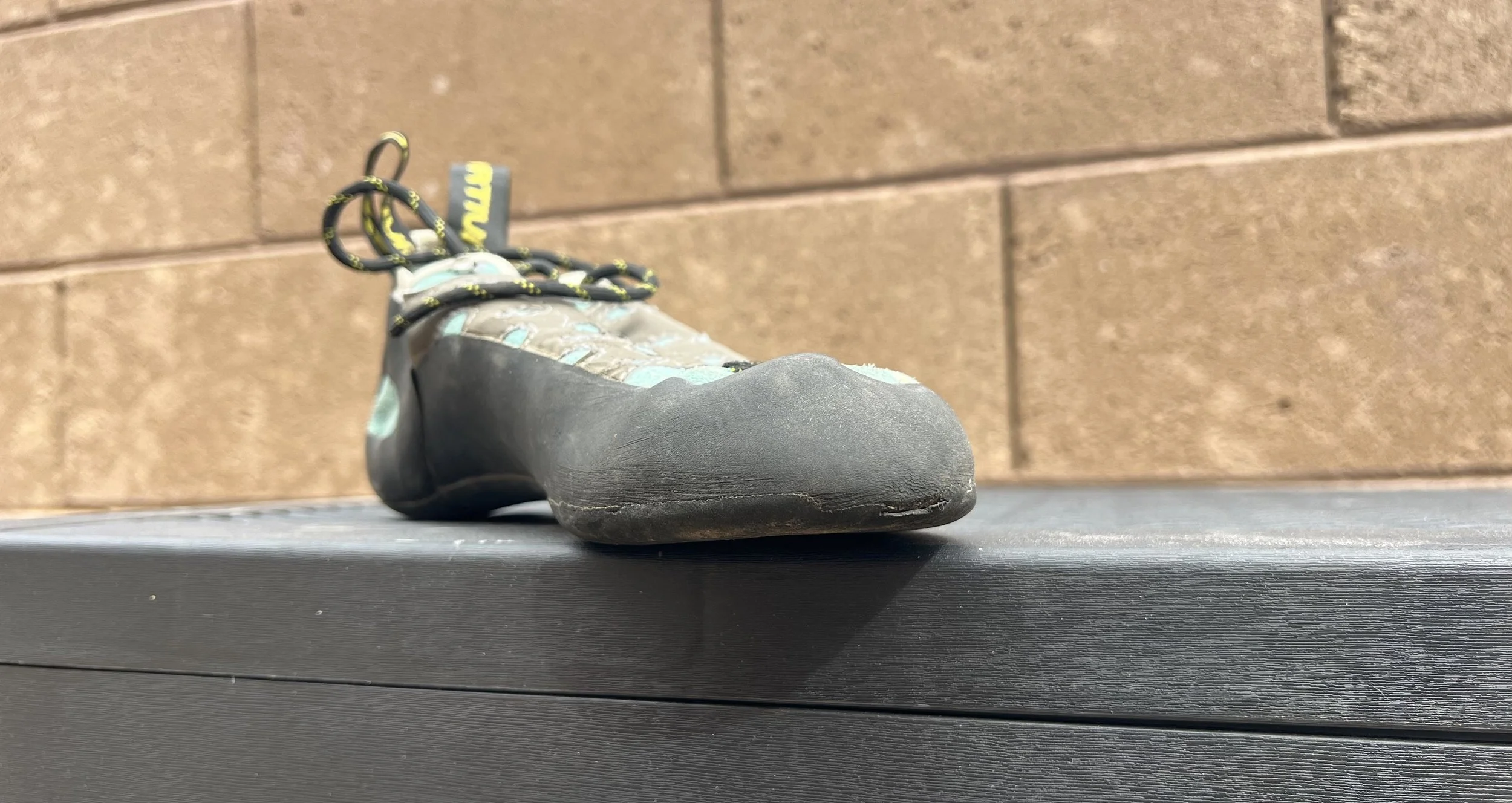
Climbing any more on this shoe is pushing it. It is certainly due for a resole.
Once the crisp line between the sole and rand starts to fade, your shoes are officially entering the danger zone. The sole is thinning fast, and may even start to peel away from the rand.
At this point, you’re no longer standing on proper toe rubber — you’re mashing down on an unholy mishmash of worn sole and rand material.
This is the perfect time to send your shoes in for a resole. Waiting any longer risks permanent damage that even the best cobbler can’t fix.
Stage 4: Beyond Repair (a.k.a. The Death Throes)
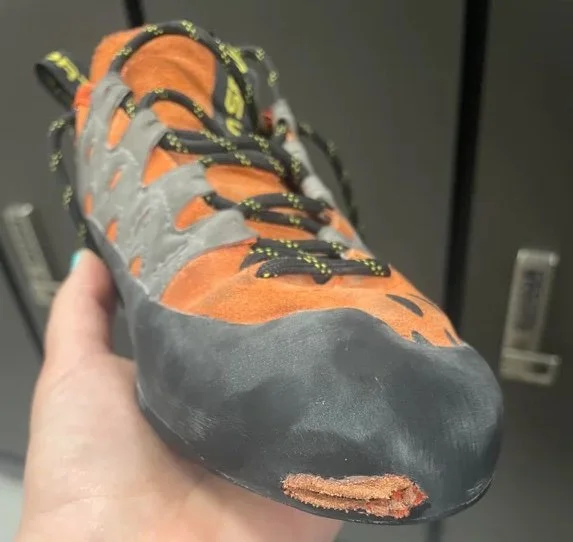
Put a fork in her, she’s done.
If you’ve climbed through the rand and into the upper material, it’s game over. The shoe’s shape, stitching, and internal fabric have likely been deformed beyond recovery.
Yes, some resolers can glue a new sole on, but the shoe will never fit or perform the same again. And frankly, you’re not doing your resoler any favors by sending shoes in this far gone.
Moral of the story: don’t wait for your climbing shoes to die a painful, bloody death. The best time to resole is before you see holes in the rand.
Why Resoling Your Climbing Shoes Matters
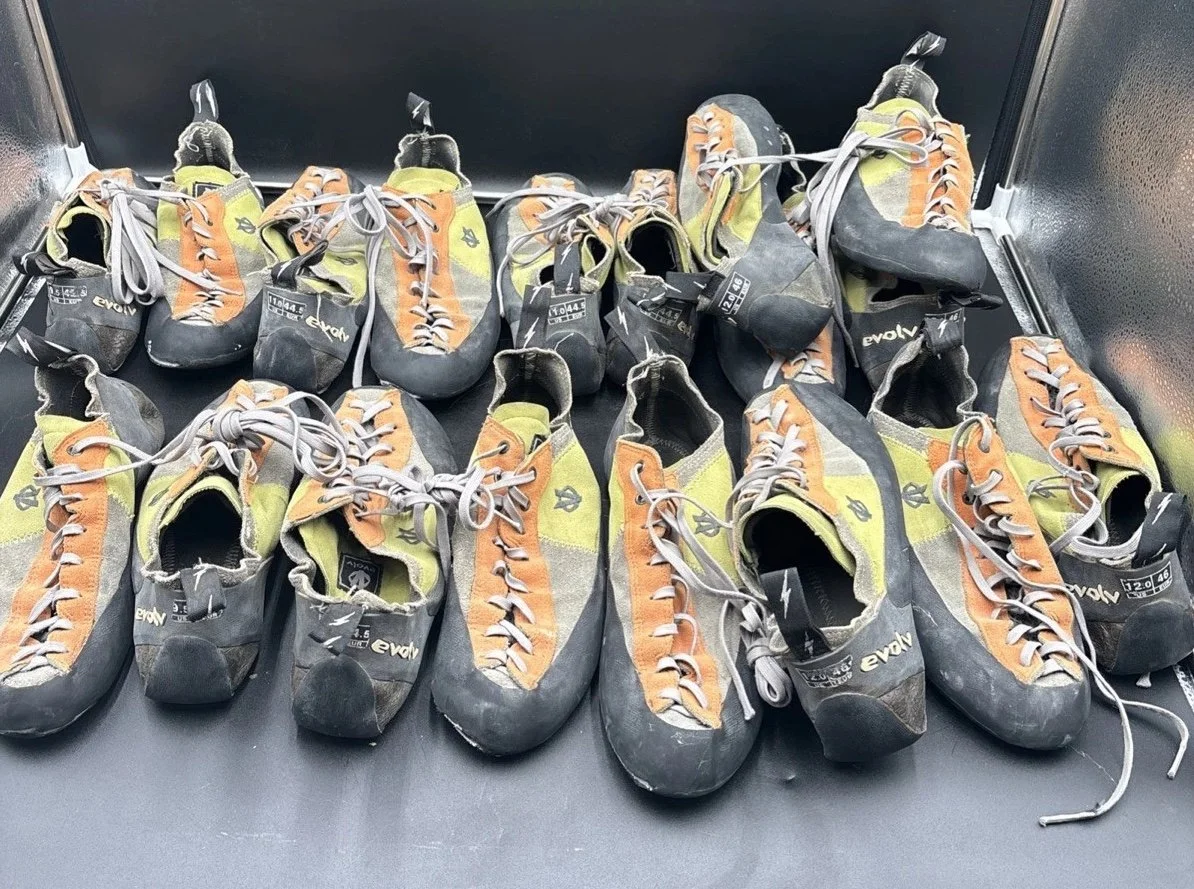
It’s too late for most of the shoes in this cache. They’re destined for the dumpster.
Getting your shoes resoled at the right time:
Saves you money compared to buying new shoes.
Preserves your shoe’s shape and fit.
Reduces waste by keeping gear out of landfills.
Most importantly, it keeps your climbing performance consistent. Many longtime climbers get attached to a pair, and send them in for four or five resoles during the life of the shoe. It’s worthwhile to milk every send out of a good pair of boots, because trustworthy shoes mean better precision, power, and safety.
Final Thoughts
If you’re staring at your shoes right now and wondering whether it’s time… it probably is.
Don’t wait for the rand to wear through or the stitching to give out. Find a trusted climbing shoe resoler and give your shoes a second life. Your feet (and your wallet) will thank you.
Bonus Tip:
If you’re a regular climber, consider having a backup pair — one for training and one for sending. That way, you can rotate them and resole in time without ever being sidelined.