
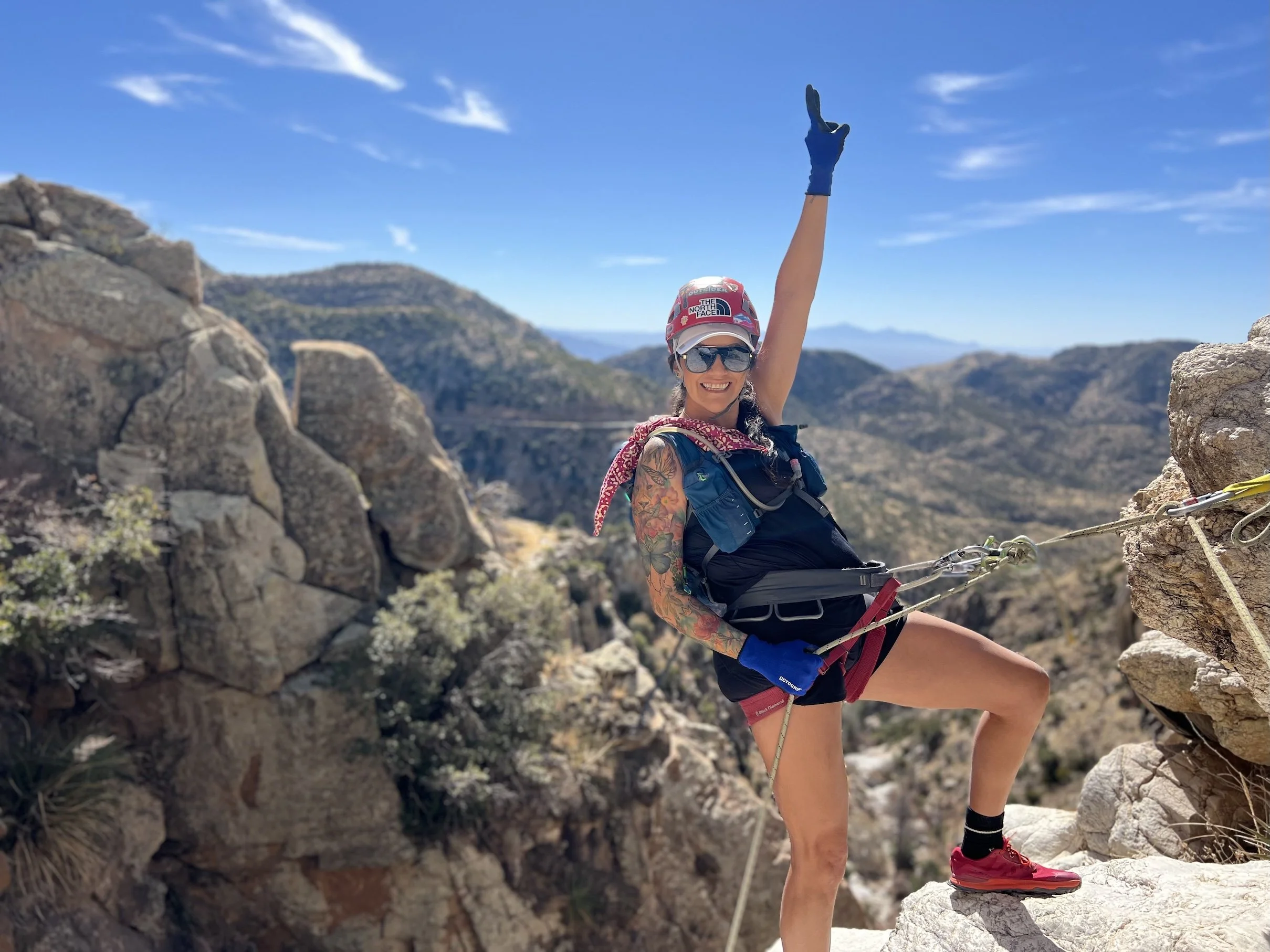
Leadership Development in the Mountains
Experiential rappelling and mountain-based programs designed to support executive coaching, leadership development, and team growth.
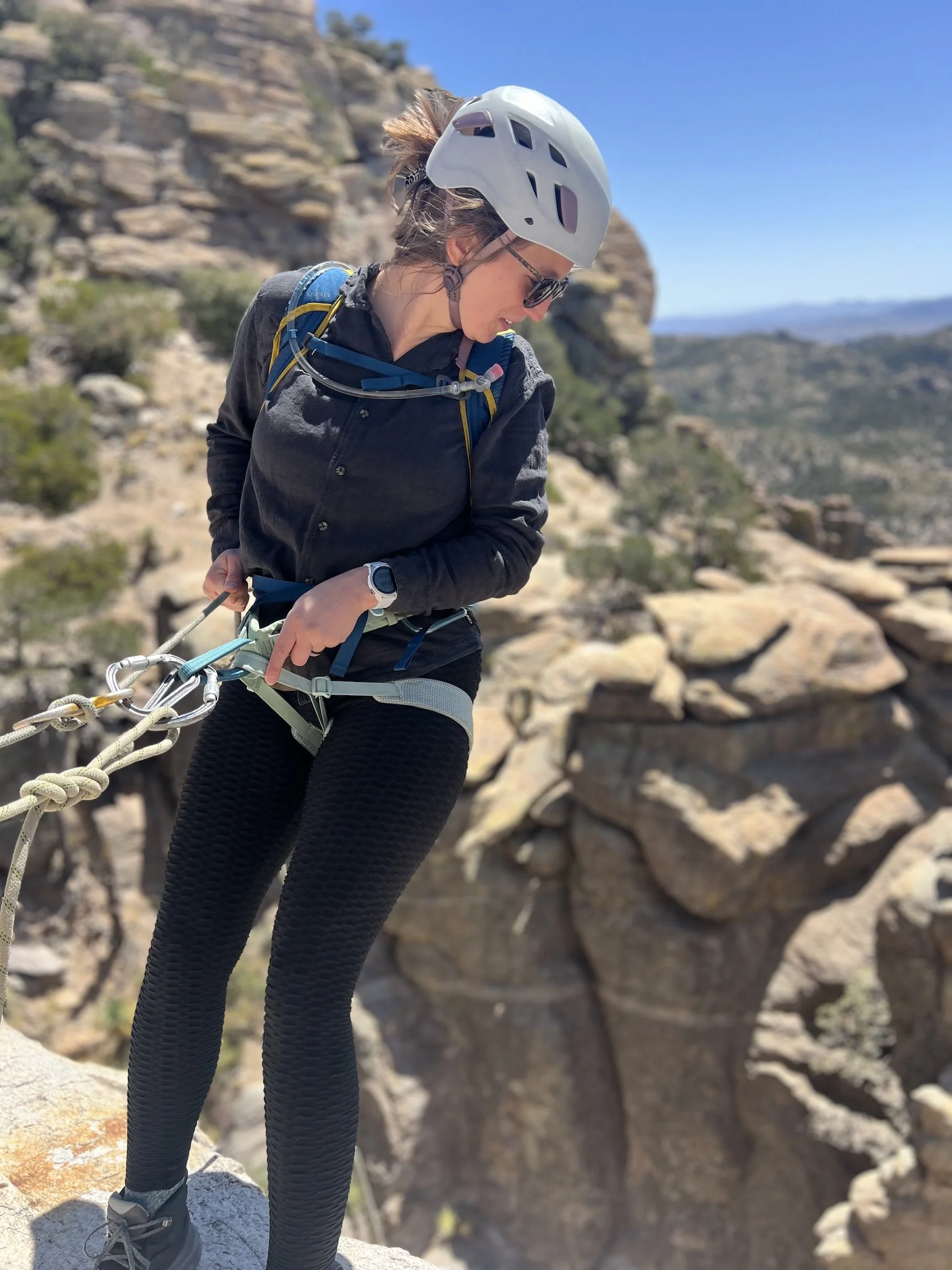
Leadership Development Experiences
Rappelling gives coaches and their clients a setting where pressure, uncertainty, trust, decision-making, and commitment can be experienced rather than discussed.

Altitude Mountain Guides works alongside executive coaches to design and facilitate mountain experiences that support the coaching work already underway.
Why take coaching into the mountains?
Leadership coaching is often reflective by nature. Clients talk about how they respond to uncertainty, how they make decisions, how they communicate under pressure, and where they tend to hold back or over-control.
A mountain environment gives them a chance to experience some of those same dynamics in real time.
Rappelling creates a strong break from the normal coaching environment. Reactions, tendencies and habits can become easier to notice. A client who is highly practiced at talking about uncertainty may respond very differently when they are standing at the edge of a rappel.
We’ve worked with dozens of professional leaders to provide a setting where consequence, uncertainty, and attention are immediately actionable.
This experience creates something concrete for the coach and client to work with.
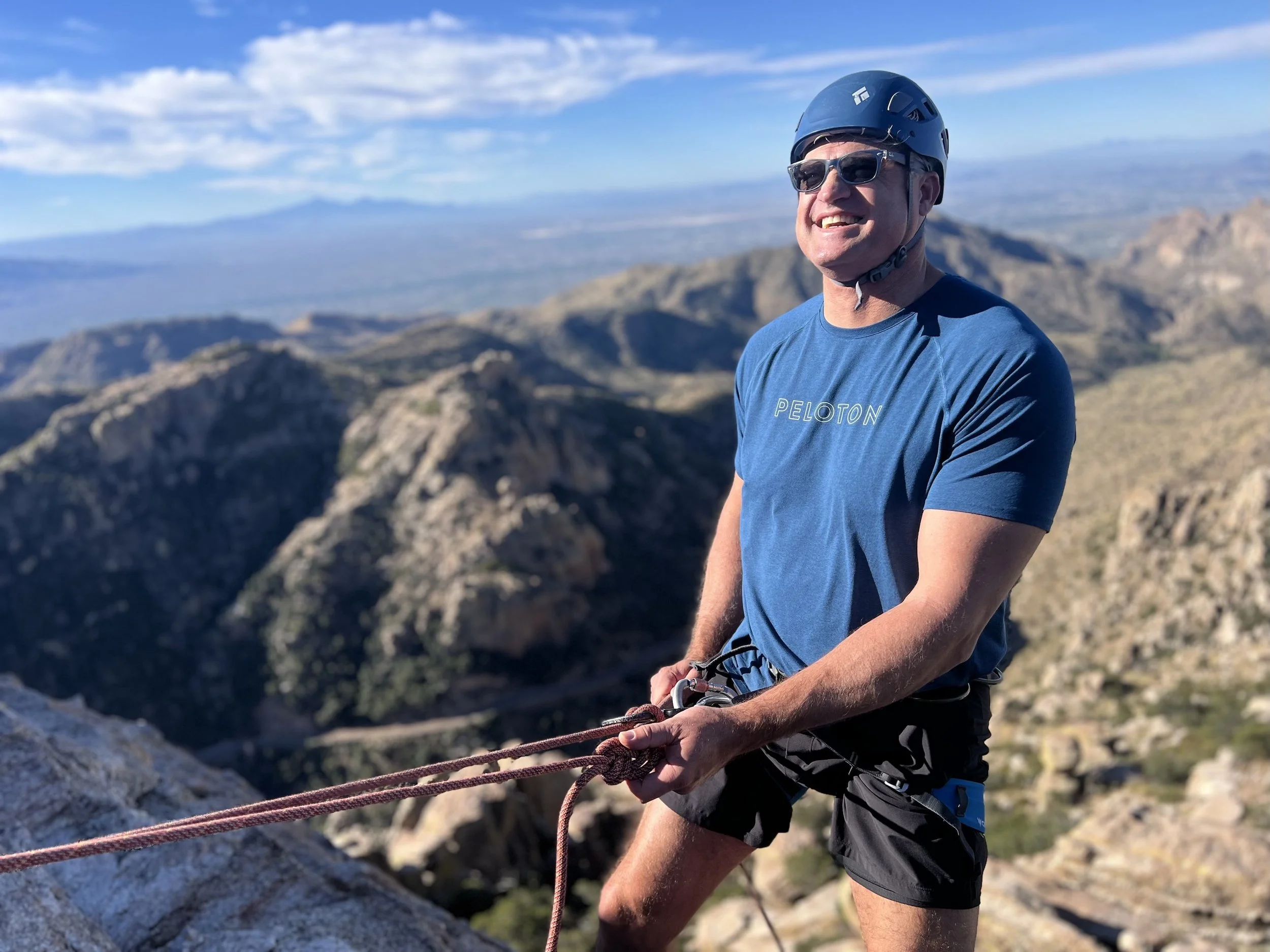
Foundational Concepts
Commitment
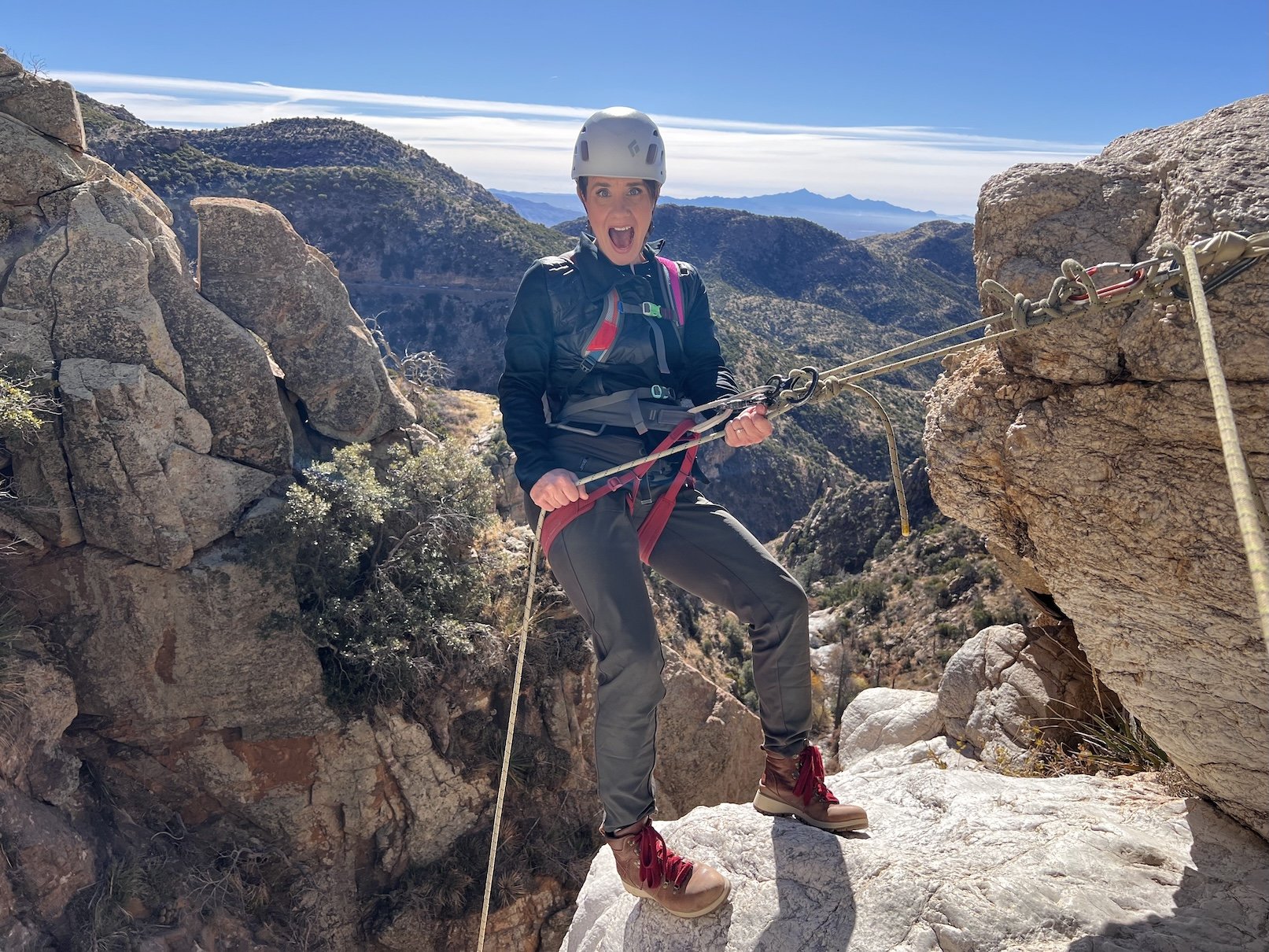
There is a clear moment in rappelling when preparation ends and action begins. We call this moment the Edge Transition. It is a perfect setting to dig into the concepts of commitment and decisiveness. Once the plan is made, the techniques have been discussed, and the safety checks completed, there is a clear moment of commitment to lean back over the edge.
Until one is committed, there is hesitancy and the chance to draw back. To commit is to create a moment of truth. A clear distinction between the time of weighing your options, and the decisive moment of choice. The transition must be abrupt and definitive.
Working with Fear and Uncertainty
Rappelling produces a response that is real, even when the technical systems managing the activity are understood. This creates an opportunity to look closely at fear and uncertainty.
What is the actual hazard? What safeguards are in place? What remains uncertain? And what is the mind adding to the situation?
The goal is not to suppress fear. Rational concerns need attention. Less rational fears may need to be understood, regulated, and moved through.
For leaders who regularly make decisions without complete information, that distinction can be especially useful.
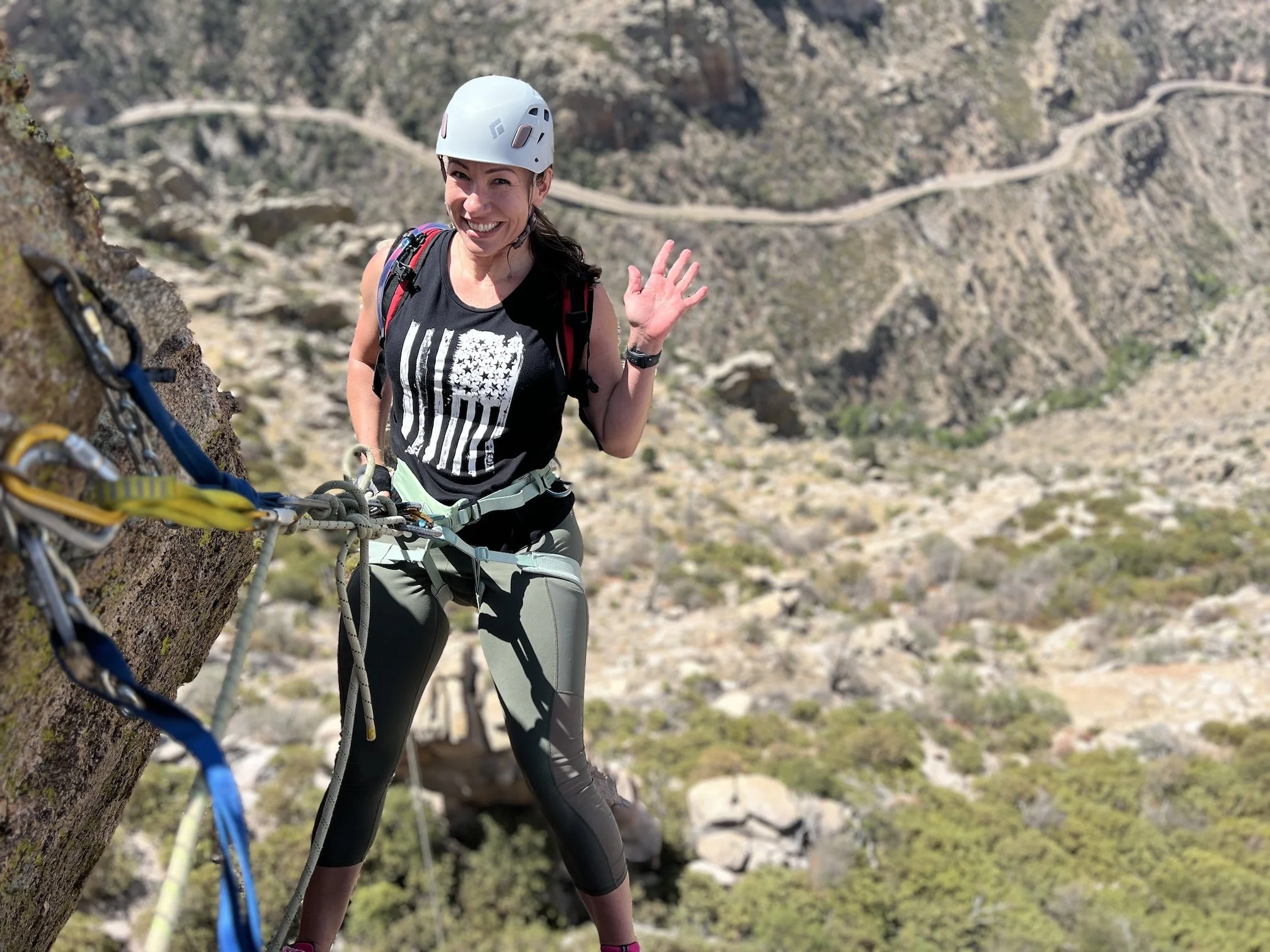
Regulation Under Pressure
It is critical to have tools to regulate emotions during periods of stress, fear, excitement and other heightened emotional states. As pressure increases, clients are encouraged to slow down enough to breathe, take in information, and act deliberately.
We work with simple physical tools such as breathing, posture, balance, and visual attention. A hunched posture will be corrected to a confident, open stance. We direct clients to consciously smooth out their breathing, and soften their gaze in order to help keep the mind quiet and receptive.
Because these tools are being used while the pressure is actually present, the effect can be felt immediately rather than discussed in the abstract.
Control
People new to rappelling often grip the rope harder than necessary.
It feels more secure, but it also creates tension and fatigue. It is wasted energy and effort.
Learning to loosen that grip while still maintaining control is a small but immediate lesson in using the right amount of effort for the situation.
For a coach, it can open a much larger conversation about where a client may be overcontrolling, overworking, or holding too tightly to an outcome because doing so feels safer.
We Work Alongside the Coach

The purpose is not for Altitude Mountain Guides to take over the coaching relationship.
The coach brings the understanding of the client, the larger engagement, and the developmental work already underway. We bring the mountain environment, technical expertise, and experience helping people work through the demands of the activity.
However, we can actively co-facilitate. We can slow things down when something useful appears, draw attention to what is happening physically or behaviorally, and give the client an opportunity to try a different approach.
The debrief: After the Activity
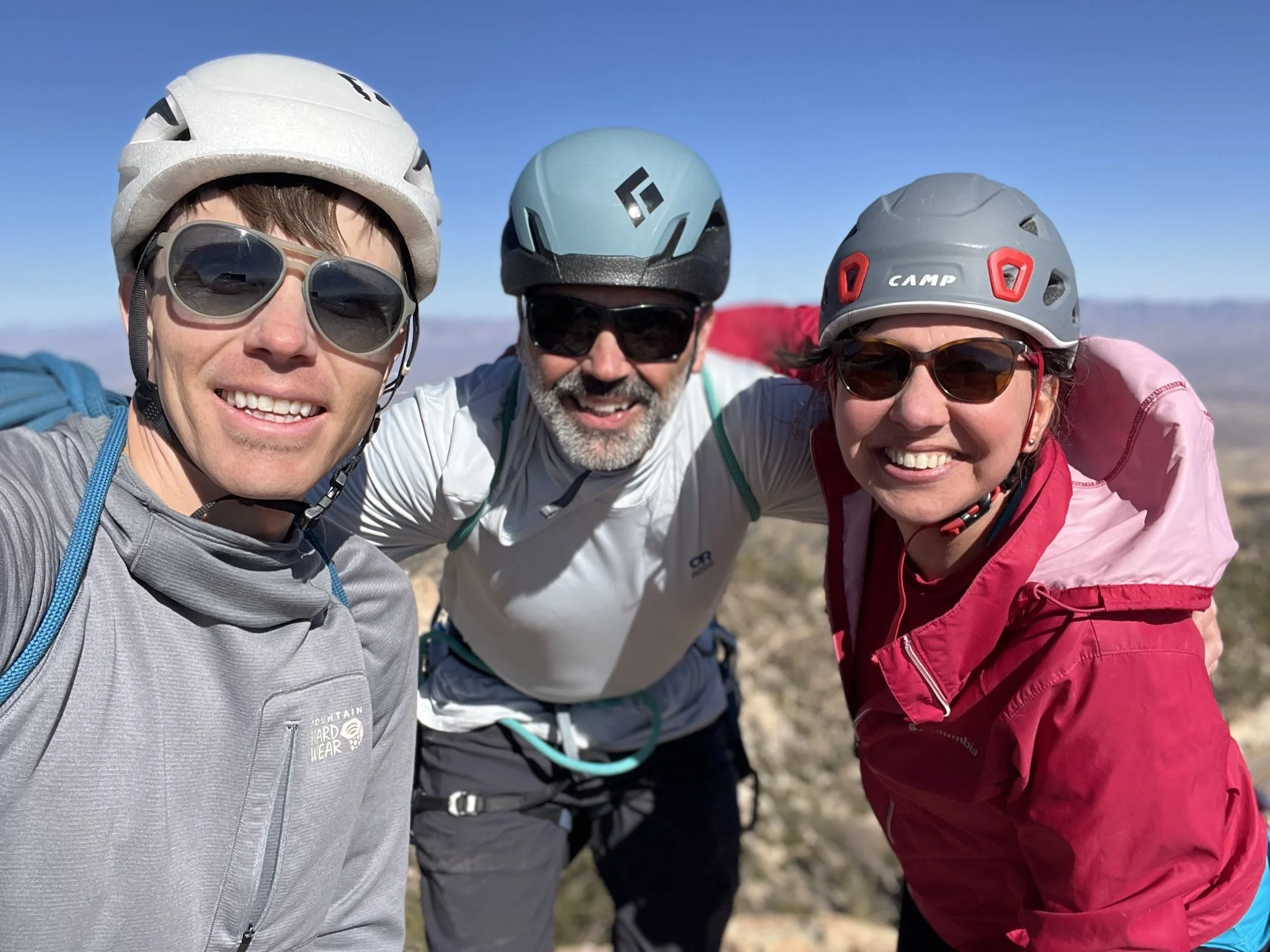
After the activity concludes, we will take a few moments to debrief the day. Rappelling is a fun activity, but the value of the experience is not the activity itself. The value is what the participant notices, what they experiment with, and what they carry back into the rest of the coaching engagement.
Afterward, we will return to specific moments from the day. Where did the hesitation appear? What happened when the pressure rose? What physical changes did they notice during periods of stress? What allowed them to commit? What surprised them about their own responses?
These moments were physically experienced rather than imagined, and they provide a vivid reference point for future conversations. The debrief connects what happened in the mountains back to the participant’s actual leadership challenges. This is how we can use mountain adventure activity to facilitate learning.
What’s Included & What to Bring
We provide everything needed for the activity itself. Coaches and clients just need comfortable clothing and a few personal items.
What We Provide
✓ Harness and helmet
✓ Ropes and belay equipment
✓ All other technical equipment
✓Instruction & coaching
✓ Professional mountain guide
What to Bring
✓ Water
✓ Snacks or lunch
✓ Comfortable athletic clothing
✓ Closed-toe shoes
✓ Sunscreen and sun protection
✓ A warm layer appropriate for the season
Build the Experience Around Your Client
Every engagement starts with a conversation about the client or group, the coaching work already underway, and the appropriate level of challenge.
Contact us to book an initial consultation before booking an experience.